



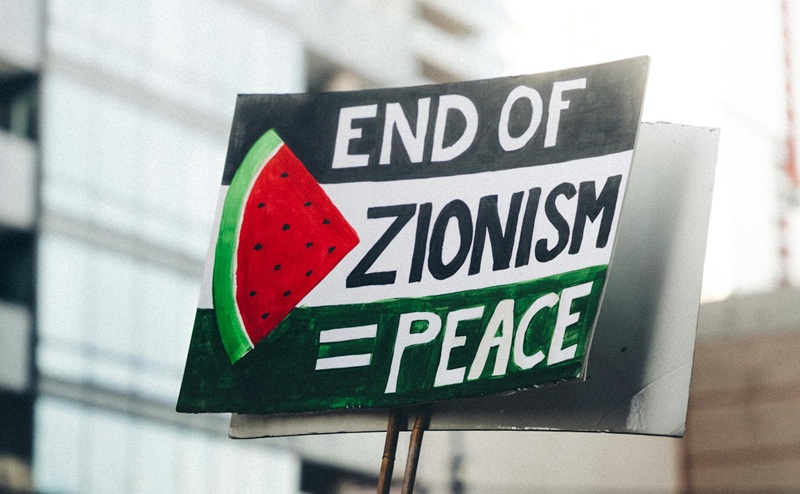
A dual-track federal offensive aimed at combating anti-semitism is rapidly altering the landscape of American public discourse, civil rights enforcement, and immigration policy.
The strategy is unfolding simultaneously across both the executive and legislative branches. On May 19, 2026, the Department of Justice (DOJ) Task Force to Combat Anti-Semitism officially launched a 15-city “National Awareness & Action Tour.” Concurrently, Senators Jacky Rosen (D-NV) and James Lankford (R-OK) introduced the bipartisan Jewish American Security Act, a comprehensive bill that seeks to mandate strict Title VI frameworks on college campuses, boost nonprofit security funding to $1 billion, and force social media platforms to disclose their moderation algorithms.
At the core of this sweeping nationwide push is a highly controversial legal mechanism: the codification of the International Holocaust Remembrance Alliance (IHRA) “working definition” of anti-semitism into federal civil rights investigations. By linking this specific definition to Title VI of the Civil Rights Act, federal agencies are increasingly treating political criticism of the State of Israel as potential instances of unlawful discrimination.
The Executive Foundation: EOs 13899 and 14188
The DOJ’s new 15-city tour serves as the public enforcement rollout of two pivotal executive actions spanning two administrations: Executive Order 13899, signed in 2019, and Executive Order 14188, signed on January 29, 2025.
Together, these orders dictate how the federal government defines, monitors, and punishes anti-semitism. EO 13899 explicitly instructs federal departments—including the Department of Education and the DOJ—to “consider” the IHRA definition when adjudicating discrimination complaints. EO 14188 escalated these measures by ordering agencies to utilize “all available and appropriate legal tools” to prosecute violators and aggressively targeted campus protests.

Crucially, EO 14188 directs federal agencies to leverage immigration laws (specifically 8 U.S.C. 1182(a)(3)) to investigate, block entry, or initiate deportation proceedings against foreign students and visa holders who “endorse or espouse terrorist activity” during political demonstrations. It also tasks universities with actively monitoring and reporting the activities of non-citizen students and staff to federal authorities.
The Litmus Test: What Now Counts as a Civil Rights Violation?
Because the IHRA framework is now the operational standard for federal civil rights compliance, public scrutiny has shifted heavily toward the specific “contemporary examples” of anti-semitism outlined in the text.
Under this framework, actions and statements that historically fell under protected political speech, theological debate, or historical revisionism are now systematically flagged for federal review. The specific criteria include:
1. The Nazi Comparison Ban
The IHRA framework explicitly classifies “drawing comparisons of contemporary Israeli policy to that of the Nazis” as an act of anti-semitism.
- The Impact: In practice, this guideline establishes a unique legal standard for the State of Israel. While political commentators, historians, and activists routinely draw analogies between various global governments and 20th-century authoritarian regimes (such as comparing U.S., Russian, or Chinese policies to Nazi or fascist systems), doing so specifically in reference to Israeli military or domestic policy can now trigger a federal civil rights investigation, risking a university’s federal funding.
2. The “Racist Endeavor” Test
The definition labels anti-semitic any claim that “the existence of a State of Israel is a racist endeavor.”
- The Impact: This standard directly intersects with academic and political discussions regarding the geopolitical founding of modern states. Under this rule, analyzing or criticizing the historical displacement of populations during the 1948 foundational period of Israel, or arguing that the state’s structural laws inherently favor one ethnic group over another, transitions from a matter of political theory into a potential violation of federal civil rights law.
3. Placing Historical Atrocities Outside Normal Inquiry
The framework flags “accusing the Jews as a people, or Israel as a state, of inventing or exaggerating the Holocaust.”
- The Impact: The inclusion of the word “exaggerating” introduces an unprecedented legal boundary around historical analysis. Scholars note that every major historical event—including wars, genocides, and revolutions—is subject to ongoing demographic debates, revisions of casualty numbers, and critiques regarding how governments politically leverage historical trauma. Under the federal framework, subjecting this specific historical atrocity to standard revisionist or critical analysis can be interpreted as a civil rights offense.
4. The Codification of Theological Interpretation
The IHRA definition includes “using the symbols and images associated with classic antisemitism (e.g., claims of Jews killing Jesus or blood libel) to characterize Israel or Israelis.”
- The Impact: This provision brings traditional Christian theology and historical textual interpretation into the crosshairs of federal oversight. For centuries, various Christian denominations have maintained specific theological positions regarding the New Testament accounts of first-century Jewish authorities and the rejection of Jesus Christ. If a religious group or individual applies these traditional covenantal critiques or biblical interpretations to the actions of the modern, secular State of Israel, those statements can now be legally categorized as anti-semitic harassment.
5. The “Double Standard” Mandate
The definition includes “applying double standards by requiring of [Israel] a behavior not expected or demanded of any other democratic nation.”
- The Impact: Legal experts have pointed out the extreme ambiguity of this clause. Because there is no objective legal metric to determine whether a protest group or political candidate is demanding “more” from Israel than they do from other nations, this clause gives federal investigators vast discretion to classify selective foreign policy criticism as a discriminatory act.
The Chilling Effect on Domestic Dissent
The combination of the DOJ’s 15-city tour and the newly introduced Jewish American Security Act marks a systemic shift in how the state monitors local communities. The stated objectives of the DOJ tour include “increasing reporting of antisemitic incidents by local officials” and embedding federal oversight directly into K-12 public schools and teacher unions.
Critics from across the ideological spectrum—ranging from civil liberties lawyers to anti-war activists—warn that these measures create a de facto speech code. By utilizing the machinery of the state to insulate a foreign government, its lobbying apparatus, and billions of dollars in annual U.S. foreign aid from severe public criticism, the federal government has effectively created a protected political class under the guise of civil rights enforcement.